
Little Ox Brewery Trial

Summary
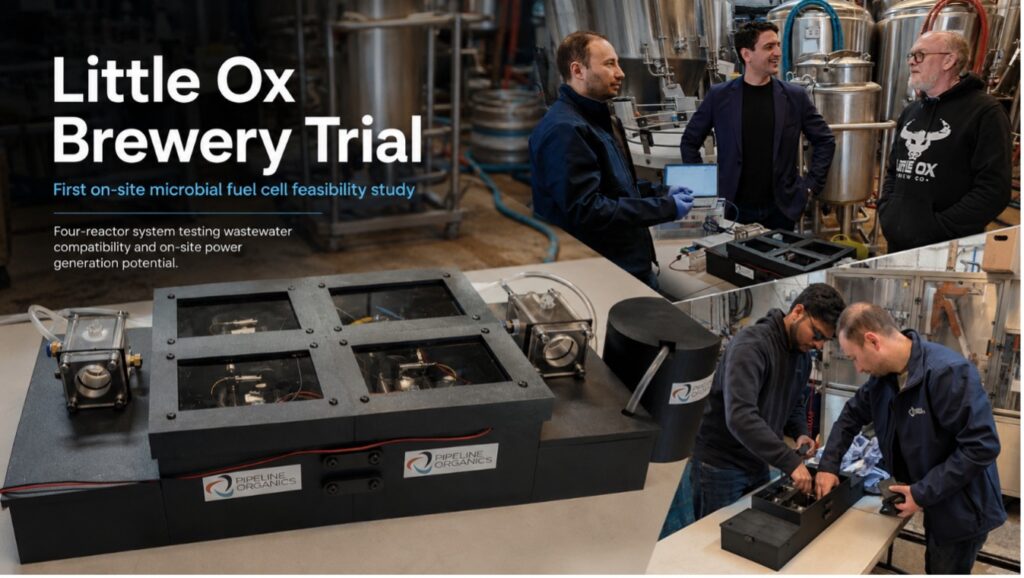
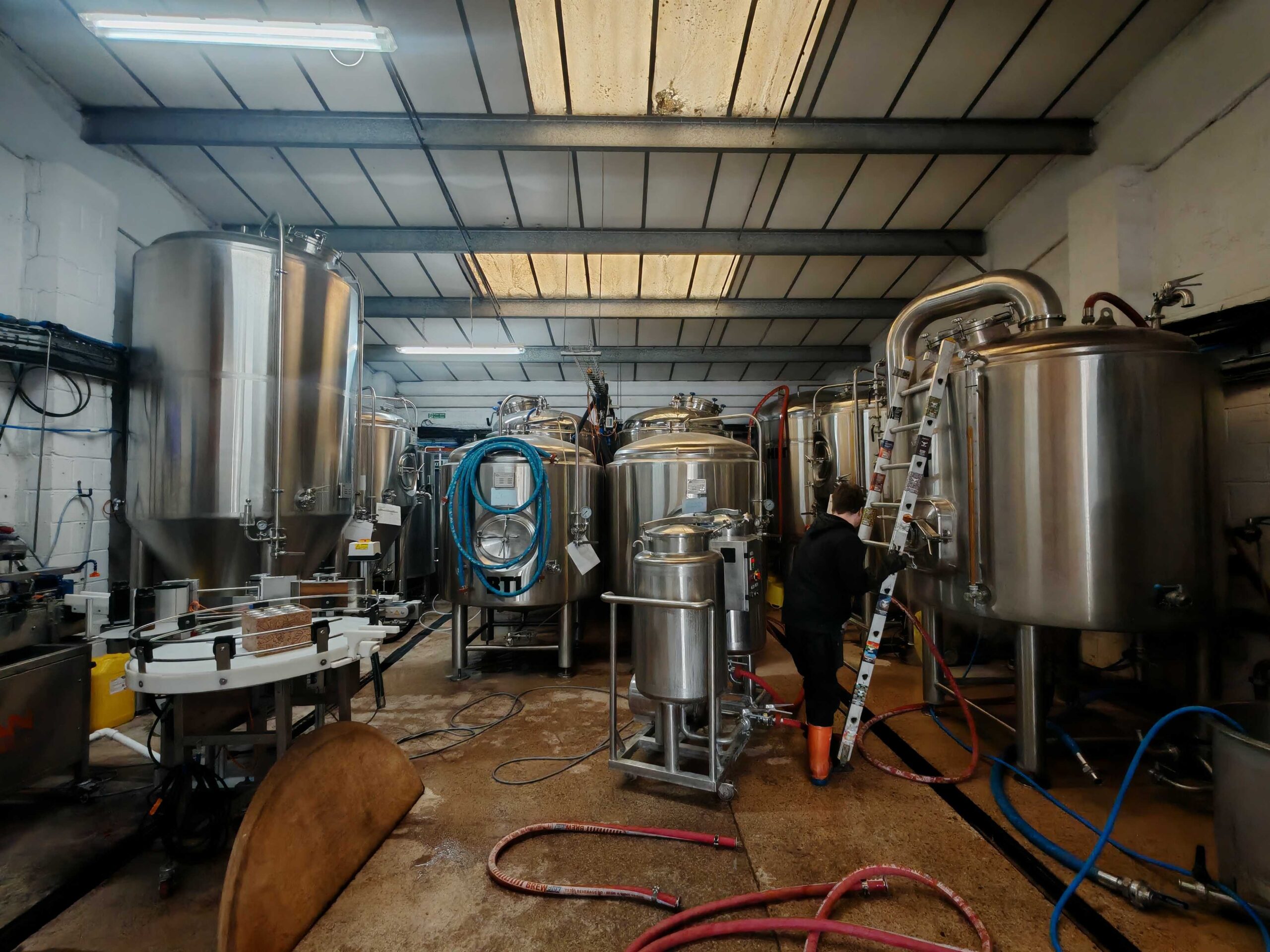
The compact four-reactor trial operated in a working brewery without disrupting production, giving us practical data on wastewater compatibility, reactor performance, monitoring, handling and future site integration. The results marked an important step from lab development toward modular brewery deployments, supporting our next generation of systems designed to reduce wastewater costs, recover energy and make treatment infrastructure more resilient at scale. See more details below.
41% organic pollutants (COD) reduction
11% of electrical power density required by site
Up to 30% anticipated yearly OpEx savings at scale
Read More
Little Ox Brewery Trial
Testing microbial fuel cells with real brewery wastewater
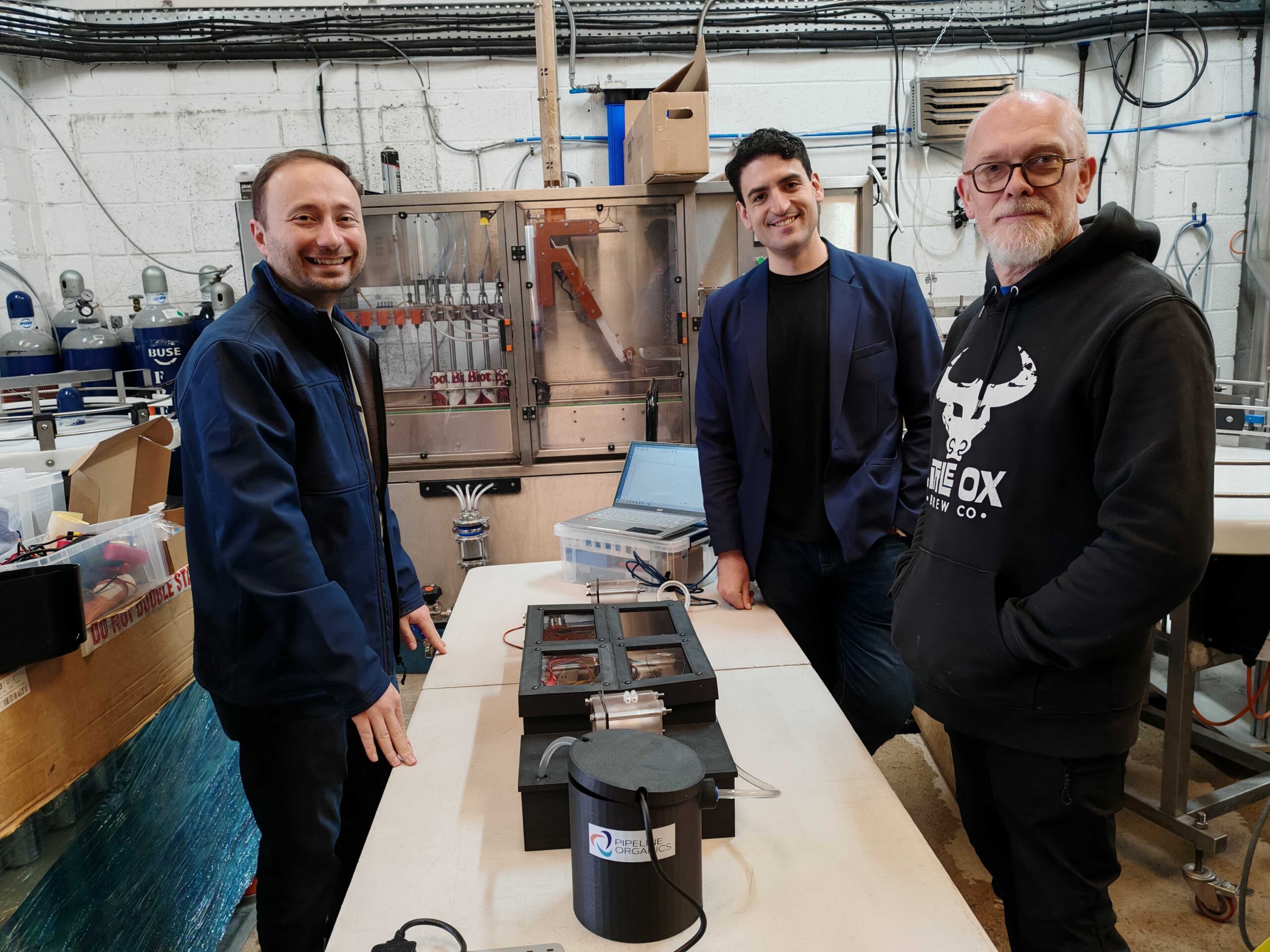
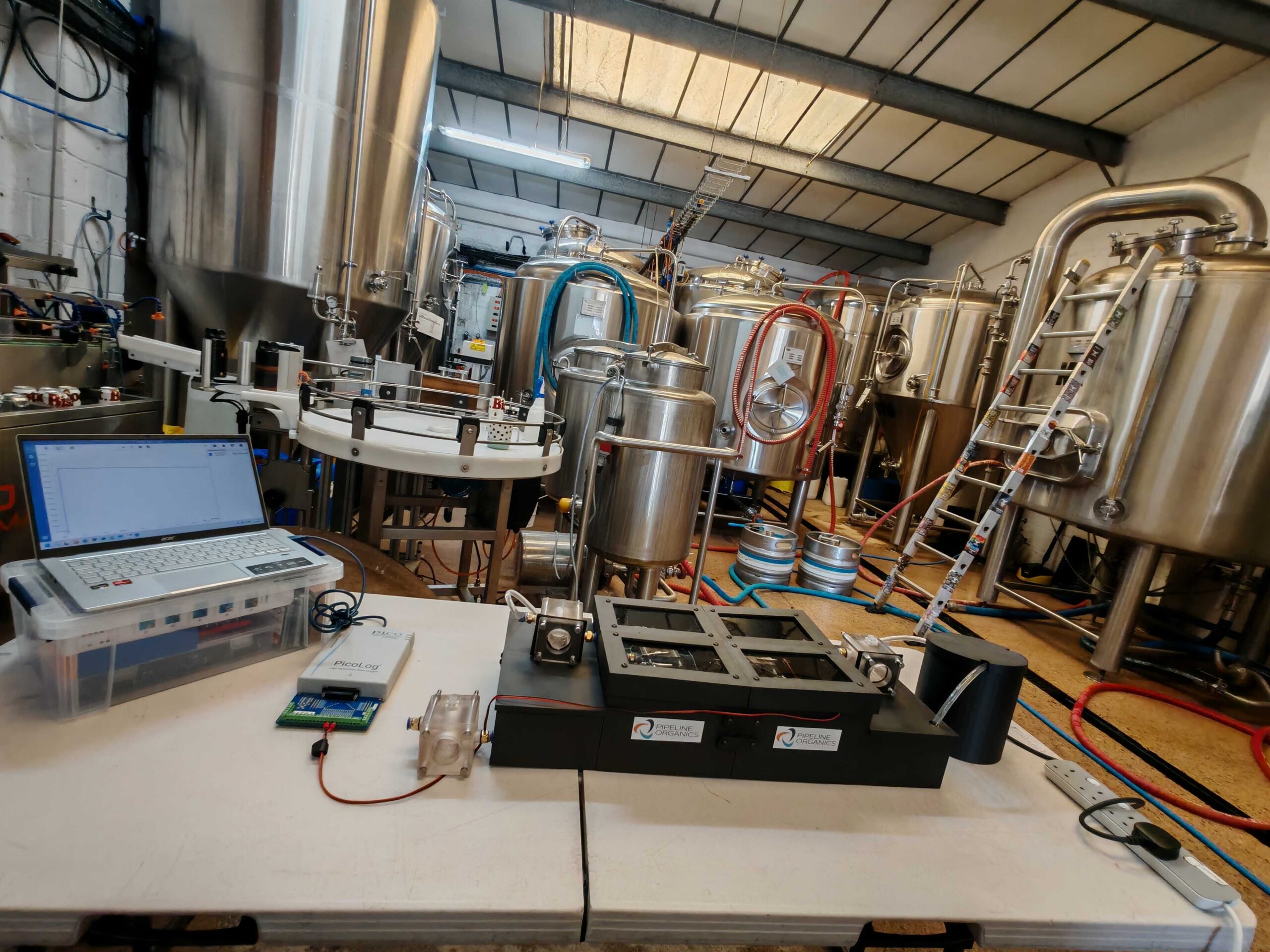
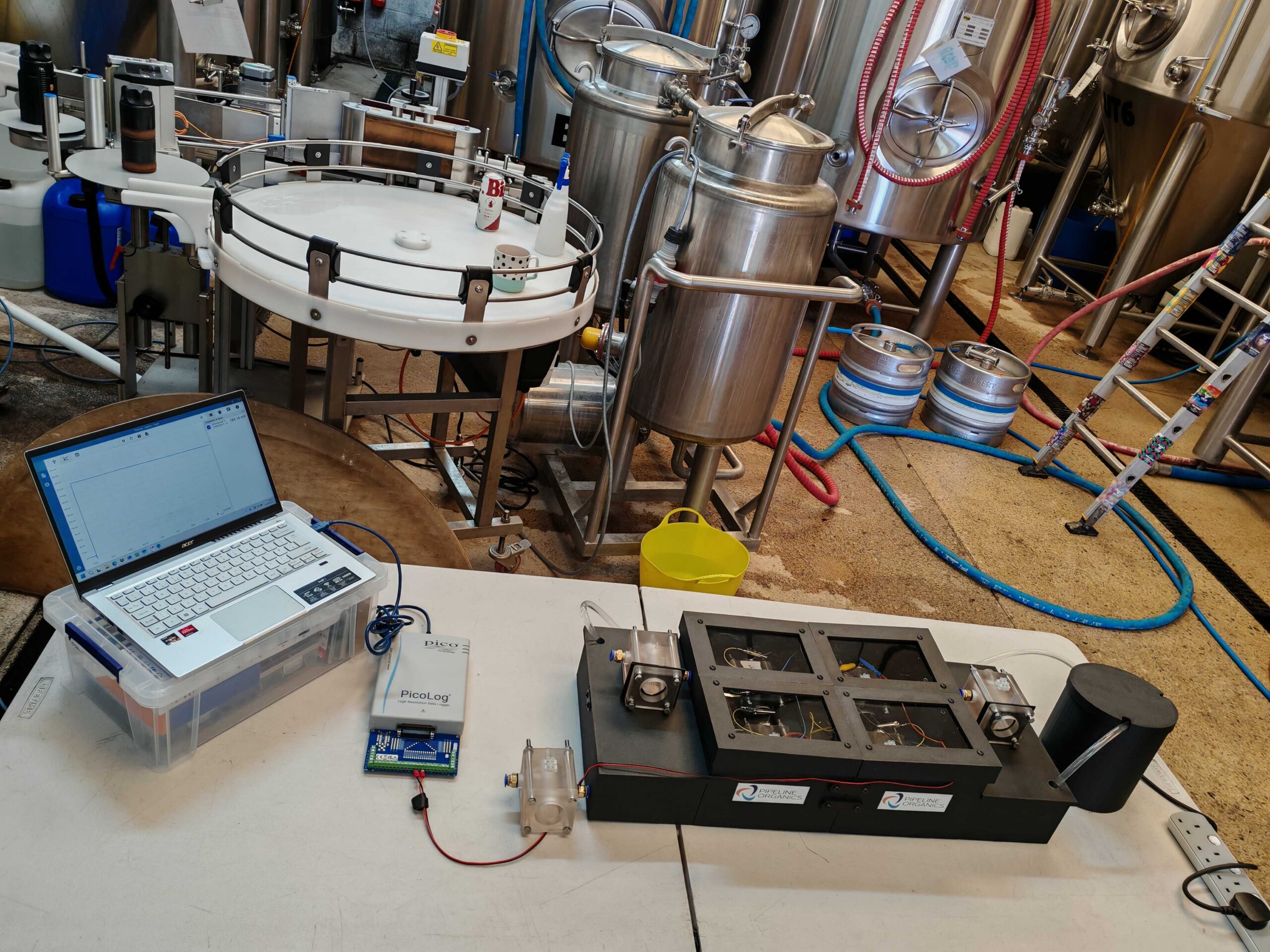
Pipeline Organics completed its first on-site microbial fuel cell trial with Little Ox Brewery, using real brewery wastewater to test the feasibility of clean power generation and wastewater compatibility. The trial used a compact four-reactor microbial fuel cell systemdesigned to evaluate how brewery wastewater performs as a feedstock for Pipeline Organics’ bio-electrochemical technology.
The challenge
Breweries produce wastewater with high organic content from brewing, rinsing, and cleaning processes. This wastewater usually requires treatment before discharge, creating cost, energy demand, and operational complexity. Pipeline Organics is developing microbial fuel cell systems that can recover value from organic wastewater by generating electrical energy while supporting more sustainable wastewater treatment.
The trial
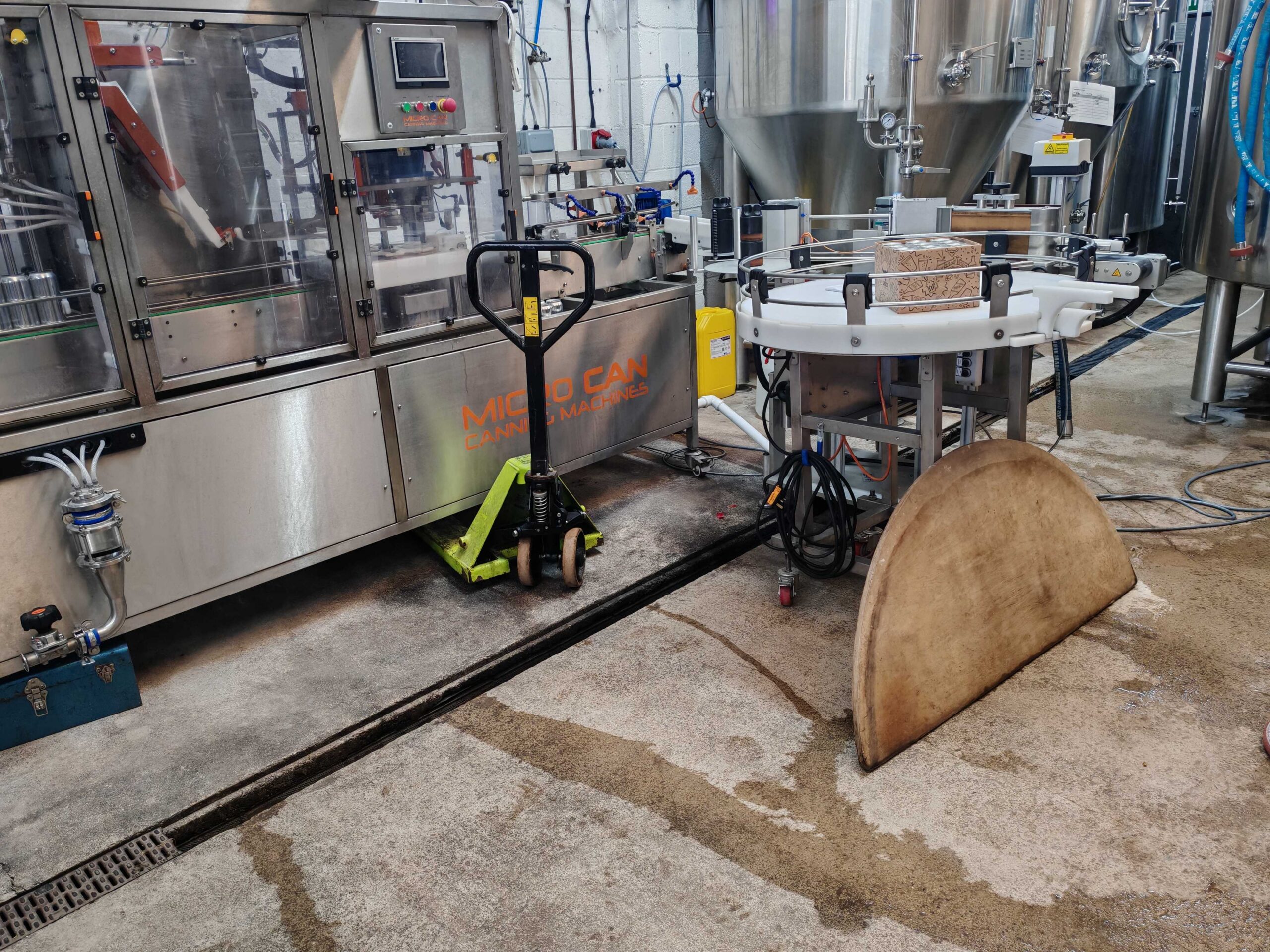
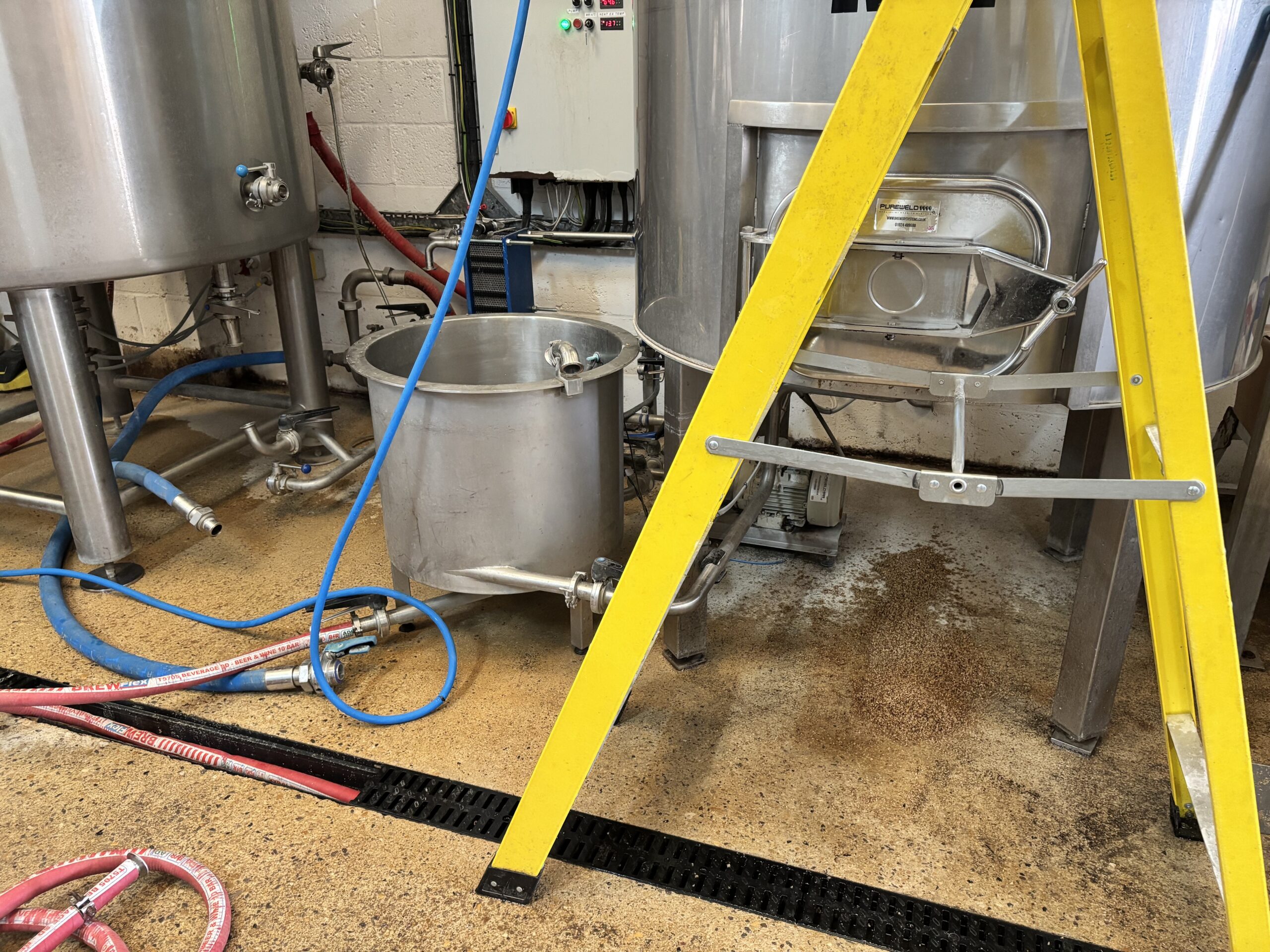
The Little Ox Brewery trial was an early feasibility study carried out in a live brewery environment.
The system included:
- Four microbial fuel cell reactors
- Real brewery wastewater from Little Ox Brewery
- Electrical monitoring for voltage and current output
- Data logging equipment for performance tracking
- A compact, independent trial setup that did not interfere with brewery operations
The aim was to understand whether real brewery wastewater could support microbial fuel cell operation and produce measurable electrical output.
What we tested
The trial focused on three key areas:
Wastewater compatibility
Pipeline Organics tested whether Little Ox Brewery wastewater could act as a suitable feedstock for microbial fuel cell operation.
Power generation potential
The four-reactor setup was monitored to assess voltage, current, and early-stage electrical performance.
On-site deployment learning
Running the system in a working brewery helped identify practical requirements for future deployments, including layout, monitoring, handling, and system integration.
Outcome
The trial successfully demonstrated Pipeline Organics’ first on-site microbial fuel cell feasibility test using real brewery wastewater.
Key outcomes included:
- Four-reactor MFC system operated in a brewery environment
- Real wastewater tested for compatibility with the technology
- Individual reactor performance monitored and compared
- Practical learnings captured for future system design
- Data gathered to support the next stage of scale-up
Why it matters
This trial marked an important step in moving Pipeline Organics’ technology from laboratory development toward real industrial deployment. By testing with Little Ox Brewery wastewater, Pipeline Organics gained valuable insight into how microbial fuel cell systems can be applied in breweries and wider food and beverage manufacturing environments.
Next step
The learnings from this trial will support the development of larger modular systems, including compact containerised units designed to help industrial sites reduce wastewater treatment costs, recover energy, and improve sustainability.